Showing posts with label Pre-Ref. Show all posts

Wednesday, 17 September 2014

Unanswered Question

Tonight is YESmas eve. The snow of leaflets has almost stopped. Tomorrow is the day we all have control of our destiny. What we decide will keep it there, or not.

So a note for the undecided, the ones it would seem the Labour party are desperately calling on to rise and vote NO. Having signed on their website to ask a few referendum questions of my own, they have me on their mailing list and, boy, have they been busy. Four times today alone, have I had emails from them: from the party itself, Gordon Brown, Johann Lamont and, a few minutes ago, Ed Milliband himself. I politely declined the first three and two of my answers are posted here. Ed Milliband, I steadfastly ignored. At least I wasn't in public transfixed by a real person, looking like as duck in the crosshairs. The question I'd asked, by the way, remain unanswered.

That's been a theme, a mantra of the NO campaign. Too many unanswered questions. It cuts both ways. We've had 'answers' from NO which in themselves have been questionable, answers they've spontaneously provided to questions about currency and pensions, for example, where they said the opposite of what, when checked, was true.

NO's missing answers actually boil down to this: none of the answers YES give are ones we like. The truth is out there, as they say, on websites, social media, in the Wee Blue Book, even in the mainstream media, if people seek out what they need to know. Some don't suit the NO campaign, some do. Information is like that. You may pick and choose, build your argument. Just be honest, though, when you simply dislike or disagree with some of the answers you've been given.

In the last week, of course, there's a wholly new set of unanswered questions. These are contained in the Gordon Brown surprise package. In this case, we have no answers either. Partly because the unseemly timing hardly allows anyone to ask; partly because answers with meaningful detail have to wait until we've taken the decision for which they're crucial. The package, ratified ('rat' being the operative syllable) by the three superheroes of Westminster without a nod from either party nor electorate, is a bucket of fog.

There's the difference. Choose, if you're NO, between answers you have actually heard but may not like and obscure promises no-one might even deliver but which you want to believe in because they sit on the other side of the decision. Choose, if you're YES, between a future you aspire to or a future shrouded in misdirection, a political conjuring trick.

This is the eleventh hour, or will be when I finish this. Actually the only unanswered question is the one we answer tomorrow. Put, as Justin Curry said, our saltire in its box. It's now or never. Screw your courage to the sticking place. Hold the line.

Oh, aye, eat your cereal.


Oh, dear... Dear Douglas...

Oh, my God! The Labour machine is working overtime. Now Douglas Alexander wants me to be so inspired by Gordon Brown's performance at the NO rally today that I'll vote NO tomorrow. This is too much. What a waste of bytes and bandwidth. I've had to let him down too. Sob.

This email also came from Labour HQ in London. Does that mean Scottish Labour is as irrelevant as I think it is?

He sent me this:


Here's what I emailed back.

Dear Douglas

I don’t think he did. He was extremely impassioned but, to be honest, there are too many unanswered questions. The new powers package came too late for me. I’ve been waiting for two years to hear a vision for Scotland’s future in the Union. To produce something this late is simply an insult. You’re asking me to sign up to something with no detail that you’ll piece together afterwards. And you have to get the party to agree to it, then the Tory and Lib Dem parties. The Tory back benches have the knives out already. And if you think Labour will win in the next UK election, you’ll really need to deliver on the mystery box well before it or else the Scottish NO vote will be adding their voice to a continuing YES-oriented movement. They’ll desert Scottish Labour at the first mis-step. The outcry will be loud, very loud.

As for Gordon’s performance. From what I’ve seen, there was passion in it but he still comes across as smug and hectoring. His performance with David Dimbleby was an even greater testament to a man not being entirely frank. He grinned too insincerely and too often, he was rude to David Dimbleby and his foot-tapping body language showed he was leaking badly.

Also, I saw you in the Milliband debacle video the other day. I don’t know if Ed meant to actually say something but standing there like a duck facing a retriever was hardly edifying. I guess you had to step in. Then after Johann quoted the experts over Trident and put her hand on her heart to say ‘if I thought that the YES campaign would save those poor children, I'd be voting YES’. By which time Ed had snuck off, followed by minders and camera crew, then you and Johann. Not much engagement there.

Well, you've guessed it, I’m for the other way. I’ve voted Labour in the past but I'm very unlikely to do that again. First the earth will have to stop heaving in Cumnock New Cemetery (Keir Hardie - remember him - he’s deid and buried there. Then you’ll need to tak a tumble to yersels. Big time.

So, it’s a YES for me.

Cheerio

Edwin

I'm off to watch Bake Off.

Dear Gordon…

I've had three emails today from Labour. One from Johann Lamont and two from Labour HQ in One Brewer's Green, London. One of the latter came from the man himself, Gordon Brown.

So, apart from Johann telling me to phone somebody so I can help the reffy rend-em effort, the rest come from darkest London. Very in touch, I thought. 

The first asked me to donate a tenner to the campaign. It's hard to see how they'll spend that in the next 24 hours, but, hey… I replied (since it's a proper email address, onenationpolitics@labour.org.uk) and said sorry. I added they'd blown it for me and that I hear Keir Hardie is spinning in his grave.

But Gordon, now, he sent the following:
Edwin,

News broke yesterday that could swing the outcome of the referendum: the SNP have been hiding plans to make £500 million of cuts to our NHS if there's a Yes vote.

The NHS lie of Alex Salmond has been exposed. People need to know the truth about what he will do to Scotland if they vote Yes. 
Can you share this on Facebook now?


Tomorrow we will cast the most important vote of our lives, a decision we can never go back on. It's vital that people can vote based on the facts — not Alex Salmond's falsehoods.


Click here to share the graphic now.* 

Thank you.

Gordon


* I couldn't bring myself to show it here. It appears, Yessified, above, though. Oh, and I removed the link. Don't want to distract anyone…

I had to reply. I doubt if he'll ever read it but…

Once again sorry, Gordon. 

 
You’ve misrepresented the threat to the Scottish NHS from changes in Barnett consequentials triggered by spending reductions as privatisation affects NHS England. The Treasury has the final say on the formula and can block (as they did with the Olympics) any beneficial knock on through Barnett to Scotland. 
 
Despite Andy Burnham saying, loud and clear, the NHS in England is under threat from privatisation, you haven’t even discussed or acknowledged that. Here you follow the Tory line, an almost opposite view..
 
You’ve never acknowledged how TTIP represents a huge threat to the NHS nationally in the event of a NO. Even though the Tories have publicly stated (on the BBC) that it’s right to include the NHS in the arrangement. Despite representations from unions and campaign groups, Vince Cable has refused to remove it from the table.

 
If there’s a financial gap to plug in Scotland it’s because of successive cuts already in Barnett, caused by Osborne’s austerity, an austerity you have pledged to continue if you return to government.
 
A YES vote secures to the Scottish people the power to vote for a government which will bring them the changes they want. This may be the SNP but it could be Labour (despite you dodging the question with Mr Dimbleby). Indeed, you actually suggested you’d rather Scots suffered the occasional Tory government in future rather than being able to elect governments for themselves, even they were Labour ones.
 
Most galling of all is the fact you have been so willing to align with the Tories. In particular, you silence yourselves up here and never even utter the criticisms you voice in another place. For a former Labour voter like myself, you’ve confirmed my disaffection. I think you’ve betrayed your deepest principles. The fathers (and mothers) of the Labour movement in Scotland have simply been betrayed.
  
As for lies, I noted, last night, you rested your case on several points which had already been contradicted by events or pronouncements from the UK government. Pensions was one. There is no threat to existing pensions because the UK government guaranteed them. Future pensions are another matter but as uncertain in the Union as you imply in an independent Scotland. To refer to a pensions threat in so broad a fashion, was so disingenuous as to be, effectively, a lie. So much of what you and your NO partners say is in that vein, at best a grain of truth spun into huge falsehoods. 
Finally, I have to conclude your eleventh hour contribution to the debate is a calculated strategy. The ‘new powers’ package and the collective vow from all three of you is planned deliberately to flash a deal before the people so late they have the briefest moment to say yes or no to it. Otherwise, if it is actually an afterthought, it’s lateness is an insult. Why could you, in Labour, at least, not have embraced adult debate, published this vision for the future in time for it to be discussed? Was it your buy-in to the arrogance of Westminster? And did you also subscribe to the London view that Scotland is a joke with self-determination as its fantasy punchline?

 
You continually raise the question of uncertainty. Independence is full of it, I agree. Yet you never acknowledge the uncertainties of the continuing union, except to say vote for us and we’ll fix it later. Now, when you say there are too many unanswered questions, don’t you see how that also applies to your last-minute mystery package? There far too many unanswered questions there too. Too many contradictions as well, Gordon, for me to believe in.
 
So, sorry, Mr Brown. It’s a YES from me.


Ah, well, time to tell Johann to shove it.


Tuesday, 16 September 2014

Wow, the Vow

The Vow, so late in the day, is still a pig in a poke. This is the vision we've all been waiting for. Now it's waved under our noses with moments to spare. No time for scrutiny.

Why so late? We're being treated like the followers of the Great Prophet Zarquon whose second coming was eagerly awaited. He eventually turned up in the Restaurant at the End of the Universe seconds before the end. Cheers, then BANG!

At least, for Zarquon, that was his second coming. For the No Better Together campaign this is the first we heard of it. Unless you count the sporadic morsels of future policy dribbled out since the spring by the individual parties.

For me, such abyssmal timekeeping is just disrespectful. Really, it's despicable verging on wicked. It's also calculated to deceive. We're being asked to sign up quick, and never mind the small print. Sign now or the game's a bogey. Why wasn't this presented clearly to us months ago? Is it really a back of the fag packet effort? Or is it a calculated sleight of hand to spoof us with a bag of half promises too tangled to tease out in the final days and too complicated to deliver.


Here's the gift, the vow they didn't call a pledge in case we remembered how Nick Clegg broke his last one on tuition fees. More powers, more fairness, guarantees of Holyrood for ever, Barnett set in stone. Not a lot of it bears scrutiny.

The powers are poorly defined, broadbrush headlines. If you consider them a moment you get this: Scotland sends its taxes to the Treasury (as before), they send only some of it back (Barnett), then Scotland gets to tax itself some more to do the extra stuff like protect the NHS. Westminster still keeps a chunk back, like it's done for years. That's left hand giving and right hand taking. A shyster's trick.

And fairness, laudable but vague. Where has it been throughout the last Labour administration and the years of Cameron's Tories? Buried under austerity, food banks and endemic inequality that began as New Labour polished up what was left of their principles and joined the spiv establishment.

Holyrood enshrined. But, as ever, no government can bind the policies of another to come. Enshrined but still vulnerable to the political weather. Or just plain revenge.

And Barnett, preserved. Not in law. Barnett is a Treasury mechanism and can be varied as they see fit. Remember the London Olympics? The Barnet formula should have added a proportional amount to funding for Wales, Scotland and Northern Ireland because of the extra public spending on the London infrastructure. That didn't happen because they decided the Olympics benefitted all of the UK. If public spending is reduced, we lose; if the Treasury wants to finagle us into not getting so much, they'll just do it regardless.

Then, against a background of growing Westminster indignation, we see Tory MPs say this pledge comes at too high a price. English people feel the same because no-one asked them. How can three parties who oppose each other, yet have stood hip to hip against Scottish independence, how can they hope to deliver any of this? Not while the back benches fume and sharpen their little political knives. Not while the groundswell of English and Welsh public opinion echoes Scottish cries for fairness (hah!) and self government.

Even Nick Robinson, recovered from his embarrassment over the Treasury business, said tonight on the BBC,  they have no detail on these proposals. They can't give any details.

I watched Eck tonight with David Dimbleby. His was the affable, reasonable politician speaking to 'David'. Brown preceded him, 'Mr Dimbleby, you don't understand', he said several times. Compared with Eck's relaxed commitment, Gogs had his customary smug grin and his endlessly tapping feet. They showed just how much he was leaking. Body language is a curse.

Pledge? The Vow? There's nothing there, just a headline with no story. The poke has no pig in it though it's full of porkies. Wake up you NO people! These jokers have you by the snouts. The only pigs around are the flying kind, migrating to warmer latitudes for the duration.

We've better things to do, us and you, than go on listening to this. We've a huge job ahead. We're building the future. That is something we can do better together.


Monday, 15 September 2014

Genies and Bottles

Do you think, when it’s done and dusted that’ll be it? I mean, YES or NO, the whole scene in Scotland and the UK has changed. The can of worms is opened, the genie is out of the bottle, the stable door is open and the horse, well, whatever way it turns, has bolted.

Politics as usual is the phrase that haunts me now. That’s because I don’t think we can go back to it. 

Once upon a time there was a public meeting. About a local issue. Feeling was high: the local council was thought to have acted against the interests of a community. I remember one councillor spoke in support. Even he, in apparent solidarity, said, now the community had voiced its concerns, we should leave it for elected members to deal with.

We can take it from here. Now you’ve spoken, be silent again. Let us take care of it.

I realised then, democracy is about the right to dissent, not just the right to agree.
 
In the referendum YES is the dissenting voice, shifting away from the status quo of the Union; NO is the voice of no change and, I fear, politics as usual. 

For me, democracy is free speech, every voice’s right to be heard, never silenced once a vote is cast, to let others run reckless with its mandate. We should always remember, if assent is a rubber stamp, dissent is proof of democracy working; argument and debate is its beating heart.

So we come to genies and bottles. Come next Friday, do we just stand down? Do we accept, if it’s NO, the promises we’ve seen writ large on tabloid front pages? Do we let the politicians in Westminster (because that’s where the promises have to turn from vague puff about fairness and guarantees into power), do we let them make the running? Should we watch them settle back into the yah-boo arguments of Westminster, making decisions and amendments to decisions because we voted them the right?

Or will we continue the popular engagement we’ve created here, both sides, YES and NO, and use its voice to demand change and that promises are kept?

Come next Friday, if we’ve said YES, do we just stand down or will we, as one older woman said to Robin McAlpine, not go back to our sofas? Will we run with the vision, from the White Paper, from the Greens, from the radical left, and build a Scotland where the voice we’ve raised now is still heard? Can we re-engage with, maybe even change, Labour, the Tories or the Lib Dems who are left here in Scotland?

Can we do politics in a better way than the complacent, haranguing politics on the green benches of London? Can we make it more inclusive, further devolved so that it’s full of argument and a white heat that shows our mettle without rancour?

Make no mistake. The challenges begin on the 19th, whether we’re holding Westminster to account as never before to honour their commitments within the Union, or making sure the mandate we’ve given as an independent nation to negotiate a settlement with the Union is pursued with vigour.

The work has hardly started. The genie is out of the bottle all right. It’s in our voices now and it will be heard. Think about your choices. 

If you vote NO, be prepared to raise your voice with ours to get what we were offered. 

If, like me, you vote YES, be prepared to work together as a nation, to speak out, raise our voices to build it.

Sunday, 14 September 2014

Ordinary People - Where Did They Go?

Weeks and weeks ago, when all this began, everyone was ordinary. At least, that was the claim. I remember the new websites, the blogs, the media scoops. The people we heard about were always ordinary: single mums, pensioners, office workers. Every one was concerned about our future but none claimed special status or importance of any kind. Never mind that some turned out to be activists, well-heeled party donors, the great and the good climbing their respective greasy polls to influence and office.

This was a very much a feature of the NO campaign and a bit suspect, part of a duplicitous urge to misrepresent.

But I remember thinking, who's ordinary? What's that about? I'd followed National Collective, and lots of other YES sites, and found the tone of stories there tended more toward how extraordinary ordinary people were. There didn't seem to be much need to claim some just-plain-folks label to give political choice validity.

So, what was the deal with ordinary? I felt it sprang from a need to hide the hand of power as it fiddled about and manipulated. It presented ordinariness as a front which, in the end, said to me, they think ordinary people are puppets, hollow, lifeless shapes to be animated by an unmentionable purpose.

I believe the YES side emphasised the opposite: people were amazing, creative, different, welcoming difference. Paradoxially, it said, we're in this together and embraced everyone from company directors to labourers and didn't make a fuss about it.

That was how it was and the status quo, NO, was represented by figures, unassuming, normal, just like the rest of us. Except they weren't. Under the surface, there were the vested interests, those who wanted us to accept a smokescreen of the same-as-you when that was so far from the truth.

All very well. We saw the rise and fall: the Vote No Borders nonsense, embarrassing attempts to puff a whiff of the grass roots from nothing; the intransigent flannel from Scottish Labour, trotting out discredited horror stories from the mouths of the faithful; the long line of put up jobs and corporate jobsworths showering gloom on our heads like some dismal rain.

And now we see it. A northbound in-flux of Westminster might, the charge of the great hundred galloping to our rescue. Messages of doom wrapped in this strange love-hate they have. The long line of bankers and business big cheeses giving us their lines of prospective failure, temporary good times, long-term decline and, generally, our complete uselessness and hopelessness in the face of a future we can't comprehend and certainly can't handle.

Now, amongst all these prominent figures, who's no longer there? Mr, Mrs and Ms ordinary. These poor sods, once pushed to the front, are floundering in the wake of the figures who are really important. They've outlived their usefulness. Nobody needs their homespun sincerity, even if it was manufactured, They're dead ducks. They can't save the Union. They never could, but for a while, they served to stave off the notion of independence.

Now that strategy's stopped working, the big guns are wheeled out. The ordinary, the closet NO activists, the party faithful, a few door-chappers, the flag-knitters and wavers, all of those folk, doubtless sincere in their way, are left by the wayside. Now's the time of the ones who matter: the bankers, the party leaders, the business executives, tame academics, mandarins and apparatchiks, the fantastically wealthy. They're the ones who'll save the Union. Sod the little people.

I hardly wondered where the ordinary folk had gone. I'd half-expeected them to be swept aside. Expendable. I'm truly sorry for them. They must have lent their names, their faces and their heartfelt beliefs to the cause, only to find the seven hundred horsemen of the establishment ride over them like a wave, also too wee, too poor and too stupid to make a difference. We knew you never could. You were the electoral cannon fodder, the diversionary tactic, the dispensable and gullible troops in our war of blind self interest. Stand aside for the elite!

Truth to tell, there are no ordinary people left. NO has trampled them under their parade of the important. YES has never thought ordinary was any way to describe people who engaged themselves in our different visions of a collective future. All I can say, to all the ordinary NOs, don't be so easily sidelined. Vote with your hearts (and I, for one, will respect it) but don't fall for the disrespectful trick that raised you up and chucked you aside when the chips were down.

To YES, I say, go on. Be extraordinary, surprise us, principally yourselves. Ordinary was never a word to describe any of us. Rise to the occasion. Be as magnanimous in victory as you would be proud in defeat. Honour the same in your opponents. We have a country to build. None of us are ordinary people. We're so much more.

Friday, 12 September 2014

Protection Racket


Assurances come thick and fast. Always predicated on an underlying fear. Whatever you are planning will have dreadful consequences BUT everything’s safe with us.

In an independent Scotland, all the things you hold dear, aspire to, believe in, will become dry sticks in the wasteland. With us, just vote NO, and we’ll look after you. We’ll see you all right. We’re the only ones who can protect your ideals, all the things you cherish.

But just move the tone slider a little on this. Move it from slime, through cheese, double-talk and cant until you get the first hint of menace. Two clicks past innuendo and one before threat. Do that and these protestations have another meaning.

You love your family, don’t you? And your kids? You don’t want anything to… happen. We can protect you. The price? Stick with us. We’ll stop anyone else causing you trouble. First hint, and we’ll send in the big boys. We’ve got 'Nuke-You-Leer 'Nick. We’ve 'Last Resort' Carney and 'Desperate' Dave.

Anybody give you grief and we’ll send back Al 'Darling' Cicatrice or Seamus 'Mugger' Murphy. They won’t take anything for an answer. There’s never enough answers for these guys.

The price? Oh, aye. Just give us your pay packet and we’ll let you have enough to live on. Maybe some extra for holidays and the occasional bun-fight. We’ll see you right. But don’t ask any awkward questions of your own or we’ll duff you up or let 'Pie-face' La-la-la-Mont speak to you.

It’s a racket. Protection is a lie. Its how they keep us in line. They use the same fear, the same weapons, to bludgeon everyone, friend or foe alike. Our enemy is your enemy, right?

And the proof of it? Take the NHS in Scotland. We’re assured time and again that it’s already ours – to fund, fiddle with and generally run or ruin as we like. If we stuff up, it’ll be because we’re too crap to do otherwise.

Studiously avoided is the truth.

Part 1.

We may have the power to run our Scottish NHS but we don’t control the funds. They come up in a shabby wee wagon they detach from the Westminster gravy train. It’s the Barnett truck and what goes in it are wads of notes made up of sums in proportion to what Westminster doles out for its own public services.

That’s the real deal and, if they manage to cut back on what they spend, there’ll be fewer wads on the truck for us. Health spending squeezed means squeezed everywhere. Across the UK, England, Wales, Scotland, Northern Ireland, cuts or charges or deeper privatisation, privatisation without end.

Part 2.

Then there's the TransatlanticTrade and Investment Partnership - TTIP. This is a trade agreement being cooked up in secretbetween the EU and the USA. It effectively opens up areas of public services to corporate bids. It would give private enterprises, corporations, the right to bid for public sector contracts. More than that, it would make the NHS in the UK (and in Scotland too, if we vote NO) obliged to accept such bids. Also, if a government, after an election, gained a mandate to remove that right to bid or end any contracts given through it, corporations whose profits were threatened could sue the government.

This is undemocratic in the extreme.

Participating governments can exclude key parts of their services, like the NHS, for example. Phew! You say. Well, no. Vince Cable, the Business Secretary and minister responsible in Westminster, hasn’t put the NHS into the equation. Presumably because the coalition doesn’t want it there. So, if we do nothing the NHS will be privatised by cut-price healthcare corporates from the USA moving in and providing services for less (cost and quality). But the Tories won’t care because that’s where they want it to be. Labour will point fingers but they won’t lift a finger.

If you need more, Google 'TTIP', visit sites like http://ttip2014.eu/ or seek out sites like 38 Degrees at https://secure.38degrees.org.uk/ to petition against it.

The NHS is under threat. Labour isscreaming about it in England and Wales. They’re just not saying so to us up here, bedridden as they are with the Tories. Why the double standard? Why not admit ii? Because then they’d have to admit, no matter if we have devolved control, the Scottish NHS is threatened by, not just dwindling budgets, but by the access the TTIP agreement forces on us. Unless we vote NO and keep the NHS out of TTIP or resist it completely.

So, where’s the protection we’re told comes from the Union? With a NO, Nowhere. The austerity-privatisation agenda steamrollers on. The Mob are doing exactly as they please. You don’t want anything to happen to your family… your kids…

Exactly, when you need healthcare, nothing will happen. Otherwise, if necessary, they’ll do whatever they must to protect us from ourselves.


A Road Not Taken (It’s No Joke)


An Englishman, a Welshman, an Irishman and a Scotsman are lost in the wilderness.

You know the format. Worthies on a comedy mission setting stereotyped characteristics against one another.

Well, I’m going somewhere else with this. It’s a referendum analogy. Why? Because I’m fed up with the other analogies: divorces, domestic dysfunction and divvying up the CD collection.

So, all four wander on. Mr English, Mog Jenkins, Roddy Claudy and Mack Scottie, have already decided who should lead. Mr English took charge, because he’s tallest and can see further. Self-appointed, maybe, but well-intentioned. The others went along with it for a quiet life. Mr English gets them to share their belongings. He takes the best of their two penknives, gives Scottie the other. He hands Jenkins the cheap pair of binoculars and keeps the high-powered ones for himself, to help his looking. Claudy gets to keep the bowler hat.

They’ve been in the wilderness so long, food and water’s scarce. It’s not looking good. They discuss the way out, argue about which direction. Mr English knows best. He’s got a lot of knowledge and he can stand up on rocks to see into the distance. He leads them down into a gully. Scottie suggests staying on higher ground but isn’t listened to. Jenkins, having once lost a card game with Mr English, nods. Claudy says, let’s get going.

In the end, hungry and dispirited, they descend into a wide ravine, dry, parched and bleak, no horizon. Mr English insists they follow the path. It’s obvious and must lead somewhere. The privations of their journey, endless effort and hardship must be borne to the end. Standing on boulders, staring out for hours wears Mr English down. More and more, he gets the other three to carry him. Often, when he’s asleep from his efforts, they gnaw on carrion, suspiciously thinking there’s less wizened flesh on the bones than last time they ate. Jenkins says, I think Mr English has a nibble when we go looking for more. Claudy shakes his head.

They stumble on. Rubble in the ravine makes walking difficult. The walls are steep and Scottie sees the occasional goat track winding precariously upward. They stop to rest, setting Mr English down, and wait for him to mount a boulder and look. Scottie says, we should head up the ravine walls. We’d maybe see better frae there, maybe find some better carrion to eat.

Mr English leaps up. No, he says, we must keep to this path. I know it will lead us to safety. We must be strong and press on. The others are not convinced but, hungrier than ever they go on. Mr English stumbles. I’m sorry, he says, you’ll have to carry me again. I must preserve my strength for looking. Without my ability to look and my great height we’re doomed.

Days later, bearded and haggard, they sit, slumped together. Mr English says, you see, we support each other, you with your lifting me up and me with my ability to balance on rocks and look. They pass around another hunk of meat and chew it’s stringy dry flesh. Mr English takes an extra bite. He glances at the others in resignation, sighs, …dry flesh is good for long distance vision… and balance.

Later that day, Scottie has a dilemma. He should stick with his friends but he knows they’re going deeper into danger. He faces Mr English, Claudy and Jenkins, it’s nae use, brithers, we’ll have tae try a different way. I reckon up that goat track.

Too steep, too high, too difficult, says Mr English, it’s a foolhardy enterprise. Mr English fixes Scottie with a glare. I’ve done this before. I know we’re going the right way. Claudy says, maybe Mr English knows best, he’s done right by us so far. And he’s been doing all the looking. Jenkins looks at them all, would it work? It’s a stiff climb… all that way…

They stagger on down the now immense canyon, its walls higher than ever, the sky a narrow blue between red rock. There’s a river now, a raging flood on one side of them as they scramble over outcrops above the rapids. They still eat carrion and leaves from scrubby bushes. Despite the twists and turns, Mr English still ascends prominences and stares ahead. They carry him all the time now.

Scottie reaches breaking point. He presents his choice. There’s a way up. I’ve seen animal tracks and I’m going to follow them up. It’s a hard climb but I’m fit. I’m a decent scavenger, I’ll find enough to eat. I ken I can make it.

Mr English is vehement. You’re not capable of it, Scottie. You’ll fall to your death, or die of thirst. Besides, think of Mr Jenkins here, and Mr Claudy. Show some solidarity! They’ve helped you carry me so I could look out for us all. You mustn’t walk away. If you have a duty to any of us, it’s to them!

Scottie replies. I just think, if we go on, we’re headin into mair danger. We’ll get to where we’ll hae to climb anyway when there’s nae way past the rapids. We’ll have less strength then. We’ll all end up piles of bones under the cliffs. This way there’s a chance. You could come wi me.

No, says Mr English, we’re better together down here. You’ll die without our support. We’re stronger, don’t you see? You’re too weak and, frankly, you don’t have the sense to make it alone. What do you think, Mr Jenkins? Mr Claudy?

Claudy shrugs. He says to Scottie, I think I’m better with Mr English. I’m for keeping on. Jenkins seems to waver, I know he doesn’t let us get a word in. But he’s got our best interests at heart..

Scottie is exasperated. He says to Mr English, I know you’ll have to walk more now but I’ve got to follow my instinct. To Jenkins and Claudy, he says, don’t let him make you carry him. He can walk fine. And don’t let him eat more than you

Mr English cries out. Scottie! You’ve always disliked me but I can’t believe you’d make such a stupid choice because of that! Don’t you see, if you climb up there, what’s left of your shoes will disintegrate. Your shirt will fall off. Look. I know these things. You’ll lose your reason. Your eyesight will go. Remember I understand far more about looking than you do. Your muscles will waste away. You won’t have enough breath. Any judgement you have will leave you. You don’t know the risks.

Scottie looks up, I have to believe in myself. This what I though we had to do all along. I know you didn’t agree but we never really talked about it, did we? There’s a different way and I’ve got to take it. Before I’m worn down using what energy I’ve left after carrying you on this hopeless trail.

Mr English sighs. You might think this is right for you. I know you’re wrong. You’ll be back in a day or two. Tail between your legs. If you survive that is. Well, it’ll be too late. We three will have moved on.

Jenkins, bleakly: I’m sorry, Scottie, part of me agrees but I’m sticking with Mr English. We’ll muddle through. Claudy mutters: I thought we were a team…

English: Well said Mr Jenkins, Mr Claudy. To Scottie, I can believe you would abandon me. Your dislike has turned to hatred. It’s not pretty, I tell you! It’s as if you’ve become like those villains and robbers we fought in the old days. Now you’re no better than them. But what I find despicable is the way you’d abandon Claudy and Jenkins, your decent, loyal friends. Shame on you!

Scottie: If I’ve disliked anything, Mr English, it’s your ideas. The way you think you’re right and never talk to the rest of us. The way you expect us to bow to your cleverness, then carry you and give you most of what we have instead of sharing it. And, no, it’s not about abandoning you all. It’s about showing you another way. I wish you’d join me or at least think again.

English: Go then! But don’t expect any help once you do because, if you get into trouble, you’re on your own.

A long time later, Scottie has struggled up the cliffs. His determination drives him. He’s reached a point, not so far from the top, where he can still see English, Jenkins and Claudy. They’ve moved on a little way but he see now they’re arguing. As if the way ahead is uncertain and they can’t agree which way to choose.

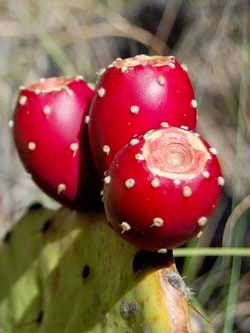
He climbs upwards to the edge of the cliff. Over it, he sees he was right: desert with an expanse of scrub, prickly pear and mesquite, and in the distance, low, green hills: food and water, meagre but manageable, on the way to where he can build his strength.

He looks back over the lip of the canyon. Shading his eyes, he sees the three small figures below. Mr Jenkins is standing on the rocky bank, powerless. Claudy is on the water’s edge, reaching out. Mr English is in the water, fallen from his vantage point, floundering, the torrent rushing past him and threatening to sweep him away.

Scottie breaks open a prickly pear fruit, sucks its juice and eats. With his penknife, he trims two sticks from a branch of mesquite. He gathers more fruit, removing the spines He takes off his shirt and ties them in it.

Back over the cliff edge, Mr English and his friends are much as they were: Claudy, helpless on the bank. Mr English in the swirling eddy. Jenkins has moved away and is now starting to climb up the cliff path.

Scottie secures his bundle, loops it in his belt, and starts back down.

Choosing to go his own way hasn’t made him heartless. Making decisions for himself, asserting his independence, never meant walking away when his help was needed.

Refusing to stay with the others, following his own path, didn’t mean abandoning them completely. They were his friends after all. He only wanted to stand with them by choice, as an equal. Having left, and now, carrying sustenance and two decent sticks, he began to go down again.


Wednesday, 10 September 2014

Methinks, they protest too much…


After 300 years of sponging, I'm surprised Scotland hasn't been kicked out of the Union already Given the vinegar coming from commentators in the Daily Mail or the Telegraph, I wonder why there's any urge at all to hang on us wasters in the North.

So, what is it has made successions of governments put up with us so long? What do we have that makes them want us to stay, especially when so many increasingly disgruntled people outside Scotland all want us to shove off?

Scotland has been a net contributor to the UK finances for at least a 100 years and it's clearly been worth whatever apparent bounty we receive to keep us. There's seldom mention of the a huge, hidden top-slice kept by the Treasury. That 's what has financed the UK's profligate military and fiscal adventures. With independence the Scottish income stream will go and the UK's dire current account deficit will increases catastrophically. Hence this week's panic attacks and the money market jitters.

George Osborne could have saved all that by being open to change and a good, neighbourly solution. But, no. He chose to close ranks with the big names in the Westminster club and shut discussion down. These are the parties, note, about whom the late Bob Crow said, you can't slip a fag paper between, them politically. Why the stonewall? Why not open debate and dialogue, even as we disagree?

I think they had the arrogance to think YES would wither on the vine. No need to promise anything. Just point out the pitfalls and we'd crumble, stagger back to our couthy lives and dismal weather.

Trouble is, they've not come clean. We have resources. Wind, water, and not the least of it, oil. We had industry too, once upon a time but Thatcher threw that away in favour of the finance sector. Straight Chicago School economics: run down whatever you won't invest in until it's a basket case, then flog it off to speculators in the City. They either asset-strip it or tart it up and sell it on. Whatever, the family silver went at a knock down price. Happy government with a few extra millions. Happy financiers with a fast buck.

Remember, they did the same after the Olympics. Its infrastructure was built with Westminster money (Scotland paid a fair whack) then infrastructure, stadiums and facilities, got sold off at a loss. Nothing changes.

But now the pandemonium begins. Because of this tried and trusted methodology, Westminster has believed it can 'invest' by the back door and then sell off the assets, pleasing the City, who then prop up the economy. The trouble is, this practice has used what it earns like revenue. The same has gone for oil taxation and anything sent south from Scotland, the North of England, anywhere that's not London. And it gets spent. No oil fund, no significant investment. And certainly not where the money comes from.

And now the prospect of Scottish independence...

Now, it's not me, but the BBC's Robert Peston* who pointed out three days ago that, with indepencence, while some financial institutions might be compelled to shift their brass plates out of Edinburgh and go south, the oil would go north. The consequence would be, as I said earlier, disastrous for the London economy

The UK's current account deficit is about 4.4% of GDP and has been as high as 5.7%. Only the UK's international assets keep his from being critical for sterling. It's bearable but on he brink.

If oil falls into the hands of the Scots, the current account deficit is likely to approach 7% of GDP and that is a potential disaster. It can't be allowed to continue. The UK would have to sell its assets and approach a spiral of financial crisis.

That's why we've had the relentlessly negative NO campaign. They don't want to win. Stopping YES is enough. That's why it has no vision. That's also why they've love-bombed us, vilified the YES campaign as racist or fascist. And why they've now sent three impassioned party leaders up the road to plead the case. Three of them. Like buses, all at once. Never mind the timetable.

The promises are bogus, a rehash of what was on the table months ago and cobbled together. None were discussed with the rest of the UK and the resentment there is enormous. Disagreements are already evident among the great and the good about the deal already.

I've said elsewhere, the referendum isn't about the money. I don't think it is, for us. Social justice, fairness and an opportunity for real change figure much more highly. But for them, the NO campaign, it is. That's why they have made so much of it. That's why they trade on fear so much: it reflects the fear in their own hearts.

No matter the rhetoric. For the Westminster parties and the majority of their politicians, the money is uppermost in their minds. The people, Scots, English, Welsh, Irish, no matter, the people don't. For Westminster and the system it presides over, the money is all there is.

* Robert Peston's BBC article


Monday, 8 September 2014

No? No Thanks!

I can’t find the image now but it showed a No Thanks sign on a lamp-post. Under it someone had added another sign: …to food banks.

That made me think about the things the YES campaign is saying NO to? I rattled off a list. Foodbanks. 100,000 children pushed into poverty. The bedroom tax. Austerity. Bankers bonuses. Unregulated financial sector. On it goes.

If we crack on with some printing and fly-posting we can turn all those NO signs to our advantage.
It made me think further. Can you do the same with YES? Just what are the NO campaign saying YES to? Well, there’s YES to the Union, I suppose. Not that such a statement carries any substance. Maybe, YES to some presumptious heavyweight of George Osborne’s calibre conjuring a way out of this awful mess of a UK. YES to paying the consultancy fees to his resident experts for their extremely worthy opinions. Or…

YES to meritocratic superiority. YES to decision-making (on anything important) devolved to a chapter-house of old Etonians several hundred miles away. YES to being collectively patronised.

I’m sure, given some thought, they could have come up with something positive about the Union. I’ve been waiting to hear it for two years. I’ve got so impatient I’ve been tempted to make my own list and let them have it. And, I realise it would contain many of the things they’ve already obscured by pronouncements of doom: best of both worlds, shared resources, mutual support. We’ve heard it all and, to be honest, there should have been something to say for them - if they had a solid, positive basis, or a track record. But, as it is, they’re groundless.

To me. the union is two worlds, cutting across geographical and cultural boundaries – two distinct classes. Being a Scot, I call them the goats and the huvnae goats. The goats stay in one world, cocooned with privilege, and only throw the merest scraps from their tables to certain favourites in the other. We live there; we’re the huvnae goats. Amongst us, divide and rule is the norm. Those with the bigger scraps fend off the ones with least: we have a pecking order of the powerless.

Shared resources?. In this place we co-inhabit, we don’t actually share much. Maybe a cultural curiosity or two or our quaint little lives. Like ceilidhs, kilts and hey-jimmy hats. The skirl of the pipes masks our angry frustration. Behind this façade, we share what make and do. We pay as we earn into the piggybank and the sharing flows one way and only a little of it dribbles back. In the flow of money and resources precious little sharing goes on. If it’s shared on some balance sheet, the huge, hidden admin fee goes unnoticed. We’ve been top-sliced for centuries.

And support. That’s a laugh. Westminster gives support like someone sober fleecing a drunk. It holds us upright, the easier to get a grip of the wallet. Security, stability, protection comes in the menacing whisper of a mobster. Protection is offered for a price. It’s never clear. Just, don’t forget, you don’t want something to happen to your country… your family… your lives… Stick with us. We’ll see you alright…

What the NO camp is asking us to say YES to fails to inspire. It fails because positive attributes of union actually have to be positive, even persuasive, and already evident. That’s why we ask, ‘If we’re Better Together, why aren’t we better together now?’ The absence of better togetherness in any real sense gives the lie to the hollow promises. It means the only positive YES to the union is that it’s generally a jolly good thing. It’s something worth having… but don’t look inside. It’s a pig in a poke.

Against that, YES is saying NO to sleaze; NO to cover-ups and hypocrisy; No to foreign wars, NO to politics and business as usual. YES has a future to say YES to.

NO has only the Toom Tabard of a moribund status quo. A status quo they’re already bringing down around our ears. Make no mistake, a NO vote is a dismal YES to remaining silent, giving up any voice we thought we had. Back to being the underdog. Jolly, ginger underdogs and their funny skirts. We’re just salt-of-the-earth, dependable, noisy when drunk and good in a scrap. We’re too dim to be any use in the real world. Thinking’s not our strong point, poor deluded no-hopers.

I, for one, prefer to take issue with that. Better together: no thanks. Just say YES.

Thursday, 4 September 2014

Hear! Hear!

Politics as usual. Men, mostly, lean back on the benches. Fewer women. The men in their anonymous suits and the women in their power-dressed finery hold a discourse. One speaks and every few sentences the lounging purple-faced, post-prandial figures wave ballot papers and moan. This moan is the barometer of disagreement or approval. Jeers and laughter for the first; a mumbled wave of ‘hear, hear’ for the last. Even the approval, a smug caterwaul, sounds like the mumblings of a colony of drunks. Which perhaps they are.

Hear, hear! It’s an instruction; an adversarial instruction. These are people who never hear anything, they only tell others to hear what they say.

This is a feature of political habit, as someone pointed out, unchanged from before the days when women under 30 had no vote. It’s braying confrontation, the self-satisfied assumption of privilege. Even when some have crawled up the ladder of achievement, borne aloft on the coat-tails of others, the finger-wagging, accusatory, groaning hubris of it all is really the creak of the ladder being pulled up behind.

This is a caricature, of course. Yet I fear, despite a principled few, we’re ruled by a Westminster institution which is already a caricature.

Here we are, the Scots, the devils of the North, asking the unthinkable. We have the temerity to demand our voices are heard. We’re waking up to the truth. For all the hear-hear, yah-boo-sucks exchanges made in the corridors of power in London. Hearing is the last thing that goes on there.

It’s telling, in more ways than one, when you scratch the surface, the purpose of government is to tell us what to do. Otherwise, why the spin? Why have we built a political process where every pronouncement has to be explained and re-explained; where every word from an opponent is spun into a testimony of failure from their own lips; where every statement is polished to eradicate the flaws and pushed into our awareness, a hard, black thing without a shred of heart? This is dishonest.

We’re not alone in wishing to build social justice. In Scotland, we’re just in a position to be able to take a step towards it. We might well achieve that step in two weeks time. What follows, though, has to be a different dialogue. We have to abandon the cynical, fingers-in-lugs, la-la-la discourse we have in Westminster.

I believe we have the nub of it now. What sets YES apart in my view is the way it's e engaged so many people and how we’ve drawn voices in that engagement from a wide range of political views.

That’s not the same as the defensive wall of NO’s apparent cross-party solidarity. There's just a cheap trick, a sham that’s strangled them from the start. Their separate voices can’t be heard and the single voice they project is a construct, at best a dry message. They have no unifying vision to bind their collective differences so they can speak out without stumbling as they avoid no-go areas and politically unutterable truths.

Future politics in Scotland has to be about continuing to hear our collective voices, separating out each individual part, and hearing what it wants to say. We don’t need to end disagreement. We can actually build on the strength it brings. It is, after all, the basis of democracy; the right to disagree and be heard. Compared to that, our present politics of silenced voices, produces no democratic profit, only a fake consensus and strangled justice.

I think we can do it, despite the claims of division from shrill pundits and vested interests who have little interest in democratic disagreement, I’ve seen and heard a lot to keep me optimistic. I’ve had heated debates and they’ve remained respectful. I’ve never wanted to silence those I disagree with. I expect and receive the same in return. We might try to persuade each other and change ideas but we can only achieve it by listening.

We’d do well to remember the maxim: ‘I disagree with what you say but I’ll defend your right to say it.’ That was Elizabeth Beatrice Hall, aka S G Tallentyre in her biography of Voltaire in 1906. Sounds like a good basis for the pursuit of freedom, social justice and democracy: not the right to agree, always the right to dissent.

There’s the task for the future, then. Build on our engagement. Confront disagreements and listen. Then we might turn away from those far-away, snorting fools whose ears only hear what they want and drown out the rest with their dissonance. Then we might free our own voices to capture our diversity and let everyone be heard. The only way to make a difference is to embrace difference itself.

Tuesday, 2 September 2014

They will turn me in a your arms…


…to a newt or a snake. That was Fairport Convention. Tam Lin. Circa 1969. Originally Child Ballad 39A. The original was in Francis James Child’s collection of ballads complied in the late 19th Century.

It’s a love song but, at the end, the story moves through a passage of demonisation, as the Faerie Queen realises Tam Lin, the earthly knight, might slip her clutches. Very gothic and elemental. Strangely resonant in Scotland today.


There he is, young Tam, a mysterious rake of a man from uncertain origins. He gets his Janet pregnant and she forces him to reveal he is a captive knight about to be the Faerie Queen’s human tribute to Hell. Only true love, well, true love, persistence and trust can save him.

So you might say, it’s just a fairy tale. One that rode the coat-tails of the long-haired folk revival of the sixties. What’s that about? Why bring it up now?

The point, for me, is that ending. Tam’s last chance to escape his thrall to the Fairy Queen, to be whole again, is to be rescued by the woman who carries his child.

To win his freedom, his true love, his only hope, must pull him from his horse as the faeries ride out at Halloween.

He warns her ‘they will turn me in your arms to a lion bold, or a naked knight… but cloak me in your mantle and keep me out of sight…’

And so it ever was, the powerful will do anything to keep hold of what they think is theirs by right. The Faerie Queen, with her magic, turns Tam into raving beasts and red hot metal (according to Child – see http://www.contemplator.com/child/variant39.html).

Centuries later, we find ourselves pursuing freedom of our own. Amongst today’s political drudgery and diatribe, we find the same thing. The powerful will stop at nothing to keep their hold over us. So we find demonisation coming thick and fast around our heads. They’ll do and say anything, tell any half-truth and wrap in a lie.

In the context of Referendum politics, I cast the No campaign in that role. They speak for the powerful in the same tones as the Fairy Queen, furious that any should dare to escape and any would dare to help. I get the feeling that behind the love-bombing, the ‘I love Scotland too’ rhetoric and all that, the undertone is ‘how very dare you?’

Hence the personal attacks. The constant conflation of trolling and cyber-crap that characterises the fringes of all sides becomes a one-sided failing of Yes The never-ending bizarre scares about everything come thick and fast . They may yet still tell us a Yes vote will turn us to reptiles or make us flounce away like overawed frogs into the peat-bogs where we belong.

There’s no substance to any of the arguments I’ve heard. They are few and scanty. Every one dissolves under scrutiny like the illusions they are. And after all the shape-shifting disguises they project on us they’ll try to strip us naked.

We need only stand firm. Alistair Darling is no Fairy Queen. He lacks the ferocity. Johann Lamont has already sold her pasty tithe to Hell along with duplicitous Murphy. Davidson, Dugdale and Alexander trumpet common cause as if such an alliance could outlast its period of expediency. Their hatchets are buried but still ready for business as usual when they expect it to resume. Cameron, Clegg and Osborne with the outrageous Farage lurk in the wings, mere amateur warlocks whose spells are worthless.

Stand firm. Say Yes to the only future left. Anything else is a fairy tale.

Wednesday, 27 August 2014

It was never about the money


I’ve watched this long enough, from the sidelines. All this endless money talk. I understand it now: it’s the narrative or bribery and corruption. Everything is reduced to a price, an inducement, the threat of losing out, or untraceable fivers in the night, secret transactions through which we’re confused, browbeaten and ultimately bought and sold.

Scottish independence, any kind of independence, is never really about the money. Yet that’s what they bang on about, the No folk. Their clamour drowns out any other, deeper debate. What kind of country are we living in? Can we have a government we actually vote for? Can we control our own affairs? Are we doomed to vote in election after election to have, at best, a thin red line of our own politicians to fight off the wayward policies of a capital and city-state remote from us?


All they talk about is money, so that the argument is perpetually bogged down. It’s as deliberate as plugging their ears with their fingers and chanting, ‘La-la-la’. So the litany goes. Currency. Fiscal arrangements. Interminable and intractable chatter, an awful jargon designed to intimidate. You don’t understand this stuff. Stay well away from it. Let the bigger boys decide. We can handle it.

Yet, behind the economic pronouncements, the subtext leaks out. This is the too wee, too poor, too stupid mantra. You can’t do this morphs into you can’t afford it. All of which sits on top of the economic diatribe as if it makes sense. We’re being asked to belittle our aspirations in the light of unimaginable piles of money. Our personal stakes in them a mere fraction but dizzyingly cast before us as a future where our lives are in tatters, a long slide from riches to rags.

What’s seldom asked in the Pro-union camp is, what kind of country do you want to live in? No-one there reflects on the long slide from riches we’re already on. Austerity, food banks, and the like punish the poor and vulnerable and turn them into scapegoats. The seeds of mistrust flourish and a pernicious jingoism throws its shadow across our lives with every measure to draw the line between the deserving and the undeserving.

The answer to our question comes back: no matter what you want, aspirations being all very well, you can’t afford it. In the money-game it sounds plausible. In the cut and thrust of money-markets and financial big-hitters, maybe we do run risks, there’s always uncertainty. This shuts up some, scares quite a few but it doesn’t make the argument.

You can’t afford it. I asked myself, are they really saying, we can’t afford social justice, or a fair, civic society, or politics with integrity and conscience? Or is it the mirror-argument: that the present state of austerity, corruption, nepotism and ingrained inequality is the price we must pay for economic well-being?

The last position brings us to a place where the rich progress over the backs of the poor. The beneficiaries are lined up in order of precedence. Those with material wealth come first. Wealth creates wealth, they say. The rest of us line up behind, happy perhaps, that we are seen as deserving unlike the stragglers who wait in the sidelines, damaged, unproductive and ultimately demonised.

The lack of justice here is manifest. Some invest material and money, some time and effort, some fall like chaff, the swarf of our industry. We were once, as so many politicians have glibly said, in it together. Once we had an arrangement, however fragile, but now it’s in shreds. When the by-products of success are human, the producer never pays.

This isn’t a picture of any place I want to live and I won’t be told we can’t afford to create something better. What’s more, if there’s a price to pay, I’m willing to pay it. I’ll put my own blood sweat and tears into it. That’s the real point.

It was never about the money. The money is a distraction, a side-issue, a kind of thought-experimental bribe. Its arguments are an inducement not to stray from the primrose path. Avoid the road not yet travelled for the wide highway paved with too many dashed hopes.

And it was never about person or party either. The Yes movement isn’t party-political, nor is it charisma of man or woman. It’s about something shared, on a different scale, where we can own our choice, be it man, woman, party or ideology. Our choice, our successes; our mistakes, our own solutions.

Independence is state of mind. It’s about self-determination, not nationalism: it looks outward as much as in. It’s inclusive, open, honest. Vote No? No, thanks.

NO Vision: No Vision


I thought I’d wait forever. But we don’t have that long now.

I started out swithering over independence. Call it prudence. I didn’t believe in declaring too early. And maybe there was a benefit. I kept an open mind. I wanted to hear both sides. I went looking.

How do you judge these things? Head or heart? Dig through the hyperbole and rhetoric? Listen to the sound debate makes? Look for the unexpected and new as people point the way ahead?

So I found, maybe as I’d expected, the tone of Yes was more positive, more open and welcoming. I’m not saying there are none who rave and rant with the irresponsibility of true Twitterati. There are, but the feeling at most levels of discussion is engaged, innovative.


Contrast that with No. Again accepting the stark, raving social-media ranters as mere sideshows for our recreational outrage, I listened to their acknowledged spokes-people, figureheads, policy makers and thinkers. All I heard was the same stereotyped political noise that emanates from the lobbies of Westminster.

I heard no understanding of the grievances ordinary people might have, no openness to new ideas on how to find a way forward within the Union they're so passionate about. In fact, I found no real passion. Where people had doubts and fears, No rubbed those tender sensitivities raw. Poured fear upon fear. If anyone admitted to uncertainty, the response seemed to be wait till you hear this, you’ll be terrified.

Still, I waited, because I wanted to hear a positive vision for our union that wouldn’t inflame our concerns but would show us a way ahead. I wanted to hear a coherent commitment to social justice, a new approach to economic affairs that didn’t pander to corporates at the expense of the vulnerable. I hoped I might hear it in fragments from the different UK political parties, from each according to their philosophies.

I heard one voice saying nothing of the kind. One voice so in unison I knew there were no philosophies behind it. Apart from the huge cry of dismissal, a cry of how dare you? Apart from party political evasions putting off commitment for ever, the eternal 'wait and see; it'll be in our manifesto'.

After that, more of the same. Continued caustic attacks based on character assassination not argument; facts dressed up in political spin; interminable repetitions of how dreadful independence will be compared with the warm and fuzzy union. But no positive future, no acknowledgement of actual concerns, no empathy, no will to understand. We, the misguided, were fools to even hope for change, rogues and vagabonds to cry out for it, dupes to ever believe there was another story we’d not been told, traitors to suggest it.

What I’m left with at the eleventh hour is this. Vote No and you will get more of the same. This is as better together as it gets. It won't be the status quo but more fear (because that’s their only currency), more deaf ears, more scapegoats and demons than you could shake a stick at. The rich will get richer and the poor will for a short time still be with us. They too will disappear into that oblivion where non-persons, the lazy and crippled, are consigned. We might remain but horribly cowed by the thought that, we too, might fall from our precarious grace and follow them.

To think, I would have had to write a positive vision of the union for myself if I’d been so inclined. All the things we still need in the greater union but which have been ignored or stripped away already. I’ve decided, I can’t wait forever. If there are unanswered questions still for us on the Yes side, they reflect a necessary uncertainty as we try to decide our own future. In the No camp no-one has even asked those questions of themselves. Better Together, mired in the same old morass, going to hell in a handcart? No thanks.

In the end, it’s simple. Yes, the wider movement, the groundswell of grassroots groups, this unlikely coalition of shades of political opinion, business alliances, civic nationalists, internationalists is redrawing internal relationships. It will redraw external ones too, between regions and nations in these islands, maybe even elsewhere in this fearful and conflicted planet. However you read this paragraph, it amounts to a vision of sorts, some of it mine, some borrowed, some shared. A vision of a positive future.

The No vision is just that: no vision.